US Should Find a Way for Peaceful Coexistence with China
 Linkedin
 Google +
The U.S. should recognize the reality that in today’s world, neither China nor it can defeat, replace or change each other. The only thing they should do is to seriously consider how to get along with each other in peace.
Since May, many U.S. senior officials, including President Donald Trump’s National Security Adviser Robert C. O’Brien and Attorney General William P. Barr, have spoken on China-U.S. relations, relentlessly talking about China’s “evil doings.” Secretary of State Mike Pompeo declared the U.S. policy of engagement with China a failure in his speech at the Nixon Library on July 23, squaring off against China by initiating a so-called new cold war.
China has responded with rationality and calmness. On August 5, State Councilor and Minister of Foreign Affairs Wang Yi, interviewed by Xinhua News Agency, reviewed the history of the bilateral ties, refuted the accusations of some U.S. politicians, and called on the U.S. to work with China to bring the ties back to the track of cooperation.
History as mirror
History is a guide to the future. We can draw lessons and wisdom from it. But if people misinterpret, distort or fabricate history, they will make misjudgments leading to disaster. How the exchanges between China and the U.S. in their 41 years of diplomatic ties are evaluated will decide their future relationship.
Generally speaking, the bilateral relations have deepened and both countries have benefited from cooperation, which has been the mainstream despite ups and downs. The increasing economic interdependence has facilitated each other’s growth and delivered tangible benefits to their people. The booming people-to-people exchanges, including tourism and educational exchanges, have cultivated public support for good China-U.S. relations.
For example, with the novel coronavirus disease (COVID-19) pandemic and the Trump administration’s restrictive policies, Chinese students in U.S. universities faced difficulties. But the top U.S. universities such as Harvard and Massachusetts Institute of Technology welcomed their international students and introduced favorable enrollment policies especially for Chinese students.
The two countries have also been working together to address international terrorism, deal with financial crises, cope with pandemics such as Ebola and severe acute respiratory syndrome, and respond to climate change and other environmental problems.
The past tracks show that the two countries benefit from cooperation and lose from confrontation. “The development of China and of the U.S. is not a zero-sum game, and we should not reject each other. What we should do is to draw on each other’s strength to achieve common development,” Wang said in his interview.
Bilateral cooperation is mutually beneficial. “If China-U.S. cooperation were unfair and not reciprocal, how could it have continued for several decades? How could China-U.S. ties have come such a long way?” Wang said.
The Trump administration has defined China as a strategic competitor and a revisionist state, and initiated a full-scale containment of China in science and technology, trade and diplomacy. The last includes interference over Taiwan, Hong Kong, Xinjiang, the South China Sea and other areas. The U.S. move to turn China into an adversary is “a fundamental, strategic miscalculation,” Wang said. “It means that the U.S. is funneling its strategic resources in the wrong area.” China will continue on its peaceful development path, strive to preserve the current international systems, and provide public goods to enhance global governance.
During President George W. Bush’s administration, then Deputy Secretary of State Robert Zoellick said that China “does not seek to spread radical, anti-American ideologies” and “the overwhelming priority of China’s senior officials is to develop and modernize a China that still faces enormous internal challenges.” He said that before the National Committee on U.S.-China Relations in New York City in September 2005.
However, in recent times, some U.S. officials have attempted to sow discord between the Communist Party of China (CPC) and the Chinese.
The U.S. social, political and economic systems are shaped by its own history, have their own logics and basis, and turn out to be effective in the U.S. China’s political and governance systems are the result of its own development and independent choices by the Chinese, and they also contribute to China’s fast growth. For over seven decades, the CPC has led the Chinese into turning a once impoverished and backward country into the world’s second largest economy. It is under the CPC’s leadership that China’s per-capita GDP has grown from less than $200 four decades ago to over $10,000 today.
China’s governance system is not perfect, but neither is the American system, which has been clearly exposed by the Trump administration’s incapability to cope with COVID-19.
It is the people who have the final say in judging a country’s governance system. A study by the Harvard Kennedy School based on eight surveys in China carried out between 2003 and 2016 found that Chinese citizens’ satisfaction with the government increased, with the Central Government’s approval rating rising from 86.1 to 93.1 percent. Many other international polls in recent years also show that at least 90 percent of Chinese trust their government. Attempts to break this strong bond by stigmatizing the CPC will be futile.
The U.S. should recognize the reality that in today’s world, neither China nor it can defeat, replace or change each other. The only thing they should do is to seriously consider how to get along with each other in peace.

Four-step framework
Faced with the most complex situation since the establishment of China-U.S. diplomatic relations in 1979, Wang stressed that the two countries need a clear-cut framework for the relationship and outlined four steps to achieve this.
First, steering clear of red lines and avoiding confrontation. Before President Richard Nixon’s ice-breaking trip to China in 1972, China and the U.S. confronted each other for 20 years. The 1950-53 Korean War and the 1955-75 Viet Nam War inflicted tremendous damage on both. Nixon’s visit to China and the ensuing normalization of bilateral ties were based on reflections on these conflicts, and sent a clear signal that the two countries should end confrontation and work together.
The recent cry by some in the U.S. to suppress China and resume confrontation is reversal and defiance of history. The U.S. is choosing the wrong target and wrong time. China, on the other hand, is only defending its sovereignty, security and right to development. It asks for nothing more.
Wang’s second measure is keeping the channels open for candid dialogue.
Dialogue is a prerequisite to address problems. Without dialogue, misinterpretations, misjudgments and more serious consequences might emerge. It was difficult to keep dialogue channels open in the 1950s and 1960s but China and the U.S. still managed to hold ambassadorial meetings, which played a key role in some critical issues. Before the current U.S. administration, the bilateral dialogue mechanisms had improved, with dialogue platforms established in multiple areas and at various levels, which contributed greatly to bilateral cooperation and managing differences.
After Trump took office, China and the U.S. established four high-level dialogue mechanisms. But before they were fully implemented, the U.S. initiated a trade war with China. “China’s door to dialogue remains open,” Wang said. “We are willing, in the spirit of equality and open-mindedness, to talk and interact with the U.S., and resume dialogue mechanisms at all levels and in all fields.”
The third step is rejecting calls for decoupling and upholding cooperation.
Some U.S. politicians have been clamoring for decoupling from China, saying the U.S. maintains the option of “complete decoupling.” But it is totally unrealistic.
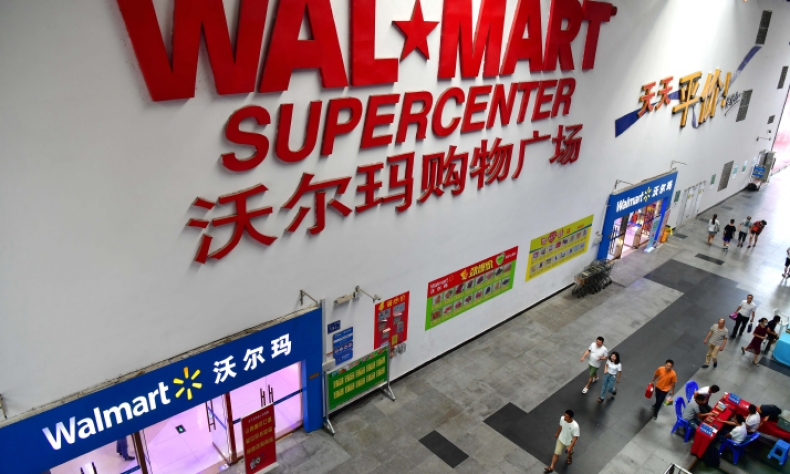
With a population of 1.4 billion, China boasts huge market potential and is expected to contribute one third of global economic growth in the next 10 years. Smart entrepreneurs, including Americans, will never give up this market. Craig Allen, President of the U.S.-China Business Council, recently said U.S. enterprises are willing to develop business and increase investment in China.
Another advantage of China is its relatively high-quality workforce, developed in the past four decades since reform and opening up began in 1978. During President Barack Obama’s administration, the U.S. hoped to move some industrial chains such as electronic products back home. But that failed to win support from the U.S. enterprises as they were highly dependent on China’s labor force. What could not be done in the past cannot be done now.
Moreover, in today’s globalized era, China is deeply integrated into the world economy and the global supply and industrial chains will become victims of any China-U.S. economic decoupling.
The international society has expressed concern about the calls for decoupling. Singaporean Prime Minister Lee Hsien Loong, German Chancellor Angela Merkel and other European officials have indicated that their countries would not follow the U.S. blindly if it insists on decoupling from China.
Decoupling in people-to-people exchanges and other areas is also impossible. As Wang pointed out, China is prepared for mutually beneficial cooperation with the U.S. on COVID-19 control and post-pandemic economic recovery, learning from each other and sharing experiences on containing the disease, and joining the global response and multilateral cooperation together with the U.S.
The last step is abandoning the zero-sum mentality and standing up to shared responsibilities. A remnant of the Cold War, the zero-sum mentality goes against today’s globalization tide. Both the George W. Bush and Obama administrations had acknowledged that China is a stakeholder in the international society and China-U.S. cooperation is key to respond to major global challenges. The thinking still applies to today’s international landscape. The U.S. should listen to China’s advice carefully, stop making more mistakes and work with China for stable bilateral relations.
The author is a researcher at the Institute of American Studies, Chinese Academy of Social Sciences.