Washington’s ‘Great Zero-Sum Game’
 Facebook
 Twitter
 Linkedin
 Google +
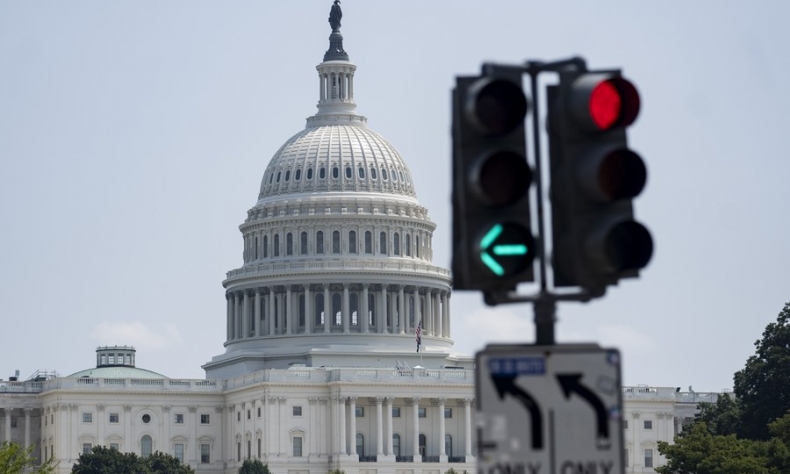
In fact, of all the new containment strategies the U.S. has launched against China since 1949, QUAD and AUKUS are likely to be the least effective and easiest to outflank.
It’s easy to become distracted by the many moves made by the U.S. against China. To be sure, there’s always a difference between rhetoric and reality, between ambition and actuality, and this has become ever clearer during the Donald Trump and now Joe Biden administrations.
While new developments like the Quadrilateral Security Dialogue (QUAD) summit in Washington, D.C., in September and the trilateral security pact between Australia, the United Kingdom, and the U.S., known as AUKUS, are headline grabbers, and while they are sincere efforts aimed at unsettling Beijing and reinvigorating American hegemony in Asia, a bit of historical perspective is necessary here: these are simply new moves in a long-running game most notable in recent decades for the declining position of the U.S. and its increasing desperation to find a workable strategy that will contain China, whether once and for all, or for a few more years.

Just another pivot
The first point to make here is that Washington now recognizes it has no hope of containing China unless it builds strategic partnerships with others. While Biden window dresses these efforts as multilateralism, they are in fact an indicator of a growing weakness that in turn exploits the weaknesses of others who, aside from India, can hardly be described as having independent foreign policies.
In short, the ability of the U.S. to impose its will at will is long gone. Now, it needs help from Australia, Japan, India and the UK. It needs to cobble together a tenuous alliance, one that is hardly solid now and unlikely to mature as such through time and risks undermining other alliances in turn. In fact, of all the new containment strategies the U.S. has launched against China since 1949, QUAD and AUKUS are likely to be the least effective and easiest to outflank. Indeed, they are far easier to overcome than the U.S. position in Central Asia, which lasted 20 years.
America’s retreat from Central Asia has been sold as a strategic repositioning necessary for its pivot toward China. And this is one reason why Biden has pushed QUAD and AUKUS so aggressively: He needs a convincing narrative that he’s moving the U.S. toward a stronger position. In fact, the U.S. entered Central Asia with two objectives in mind. One, of course, was to respond to Al-Qaeda, which perpetrated the September 11 terror attacks in 2001.
The other was to put a large American military footprint on Central Asia, to project threats against Russia’s underbelly and China’s strategically sensitive western regions. This was strategically vital in China’s case because new coastal-based defensive capacities had all but ensured that conventional American attacks coming from the east, whether by sea or air, would be unable to achieve broader objectives should Washington choose war or if it simply wanted the ability to bully Beijing with threats.
Efforts to dominate China from the east have never been sufficient. During the “century of humiliation,” neither the Western powers nor Japan were capable of imposing their will on all of China. Rather, it was understood that to truly control China one must both penetrate and encircle. To encircle China one needed a strong position in Central Asia, and to penetrate one needed especially to hold the Tibetan Plateau.
Tibet has long been central to Chinese security for two reasons: Whoever occupies the high ground has a decisive military advantage; and the headwaters of several of China’s rice producing rivers start and can be controlled there.
It helps explain why the Central Intelligence Agency instigated the problems in Tibet in 1959, why the U.S. entered Central Asia so forcefully and for so long following the September 11 attacks, and why the U.S. continues to meddle in issues related to Xinjiang. But given the fact that these efforts have all failed over time in the strategic objectives against Beijing, the U.S. is returning to approaches from the east, but now with China in an even stronger position.
QUAD+AUKUS
QUAD thus far has been a whimper while AUKUS seems like a sudden outcry. The latter might embolden the former, but other countries instead choose to free-ride at Australia’s considerable expense. Nevertheless, several critical questions remain. Most explosively, does AUKUS, under which Australia will acquire nuclear-powered submarines, effectively proliferate nuclear weapons, and what does this say to Iran and the Democratic People’s Republic of Korea (DPRK) and everyone else?
Further, the likely costs are unknown, but some estimates exceed $100 billion. Is this affordable, given Australia’s two-way trade with China—its largest trading partner—was roughly a third of its total trade in 2020? With reports the U.S. and the UK can’t afford their own submarines, what happens if this deal tanks bilateral trade with China and Australia experiences a major decline in revenues?
Additionally, while many discuss the submarines’ abilities to launch attacks on China, this seems unnecessary given the large number of American assets the U.S. already directs at China. And while Australia doesn’t have an independent foreign policy and has followed the U.S. historically (and disastrously) into Korea, Viet Nam and Afghanistan, it’s difficult to imagine Canberra independently attacking China under any circumstances.
So what’s the purpose of this deal, assuming it’s affordable and nothing derails it over the next dozen years? In fact, it does seem like a cost-sharing arrangement, not unlike what Trump sought from NATO allies. That plus feeding U.S. defense contractors while poking Beijing are reasons enough for Biden. But a neglected aspect is the relevance AUKUS has for Antarctica, which many believe was already a focal point of strategic repositioning.
Chinese planners appear to have concluded years ago that the U.S. will withdraw eventually (and unilaterally) from the international treaty prohibiting mining and other activities on that southernmost continent, in part to address shortages in strategically vital minerals like rare earths. It should be noted that rare earths are relatively abundant in China and Afghanistan, and made more accessible with polar ice melts associated with climate change. Perhaps one climate crisis exponentially increases the risks of more to come, including despoiling that continent and nuclear subs playing cat and mouse in already treacherous waters.
Serious obstacles
AUKUS might impact QUAD in separate ways: It might embolden other members, Japan and especially India, given Washington’s aggressive approach toward Beijing. Conversely, it might also worry Tokyo and New Delhi that the U.S. is not only favoring Australia, it’s also being too aggressive and destabilizing. The trilateral mechanism might incentivize Japan and India to be less enthusiastic about QUAD—to essentially free ride on the heavy costs that Canberra will carry. And it suggests the jingoistic use of the term “Indo-Pacific,” which Washington has used to entice New Delhi, has less to do with India being a premier naval hegemon in the Indian Ocean than it does with the U.S. preserving its position there.
QUAD faces serious obstacles, and the lack of a substantial statement from the recent leaders’ summit indicates they remain at odds on many points. They disagree in part on the purpose. For example, is it explicitly a China-containment strategy or is it concerned about broader security issues, e.g., the DPRK? Another concern is cost. The U.S. is very sensitive about cost sharing, while Japan, India and Australia are concerned about the economic costs associated with alienating Beijing, given the large role China plays in their economies.
Another question is the emphasis on “democratic values” as a criterion for inclusion. On the one hand, some democracies in Asia oppose QUAD and even consider some of its members dangerous, for example, the Republic of Korea (ROK) vs. Japan. And in the case of India, its democracy is regarded by many as having degenerated in recent years, and New Delhi is sensitive to being judged accordingly. There are other questions: Would the U.S. support India in a border conflict with China (unlikely), would the U.S. support Japan in a conflict with the ROK (very unlikely), and would any or all support the Taiwan authorities in a conflict with the Chinese mainland?
In short, these new developments in America’s “great zero-sum game” indicate the U.S. is moving from a position of weakness to a position of greater weakness. This doesn’t mean Washington can be taken for granted—that the paper tiger has become entirely toothless or completely lost its bite. But it is a signal that the broader trend of a declining U.S. hegemony is still accelerating, despite all the White House efforts to pretend the opposite is true. All said, it’s much ado about less.
The author is professor of politics at East China Normal University in Shanghai.










