Washington’s Misguided War on Chinese Shipbuilding
 Facebook
 Twitter
 Linkedin
 Google +
Until Washington stops confusing nationalism with strategy, it will keep losing ground not to China, but to itself.
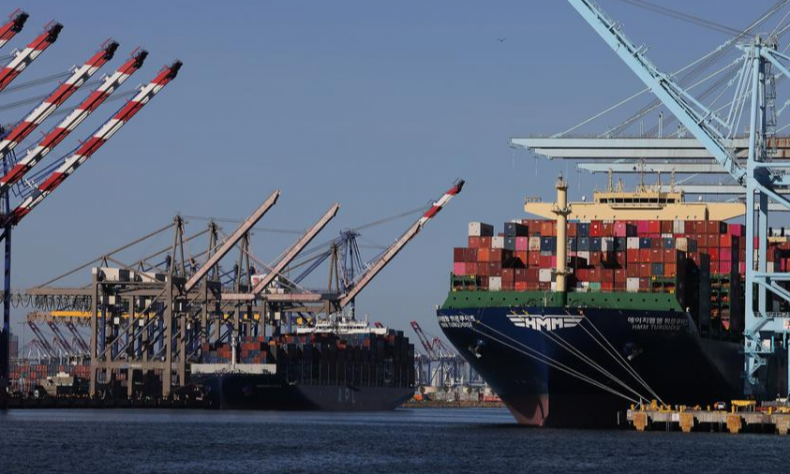
The Trump administration’s decision to slap port fees on Chinese-built or operated vessels is being touted as a bold move to revive U.S. shipbuilding. In truth, it’s a symptom of a deeper rot in America’s economic thinking a reflex to punish competitors rather than rebuild capacity. This is not industrial strategy; it’s theatre. And it says more about America’s insecurity than about China’s strength.
The United States now builds fewer than a dozen large commercial ships a year. China, South Korea, and Japan build thousands. This collapse didn’t happen overnight; it’s the product of decades of neglect and political short-sightedness. U.S. shipyards have withered into niche players focused on Jones Act carriers and naval support, crippled by outdated facilities, fragmented supply chains, and a shrinking skilled workforce. Simply taxing foreign-built ships won’t change that. You can’t tariff your way back to competitiveness when the industry you’re trying to protect barely exists.
That’s why this measure feels less like strategy and more like symbolism. Washington talks endlessly about “decoupling” and “industrial revival,” yet offers little evidence that anyone has done the math. Can U.S. shipyards even expand production? How long would it take to rebuild the workforce? What investments in infrastructure would be needed? Silence. It’s a slogan only, but?pretending to be a strategy.
Worse, it risks hurting the very sectors it claims to protect. American exporters from Midwestern farmers to Gulf Coast energy producers depend on foreign-built ships for affordable transport. Raise port fees, and you raise shipping costs. That means higher prices, fewer exports, and weaker competitiveness abroad. Several port authorities have already warned that cargo could simply shift to Canada or Mexico to avoid the fees. Meanwhile, China has plenty of ways to retaliate, from slapping reciprocal port fees on US vessels,?curbing soybean and LNG imports to targeting American machinery. We’ve seen this movie before the 2018 tariff war that ended with Washington paying billions to bail out its own farmers.
Predictably, Beijing has matched the move with reciprocal port fees on U.S. built, or?25 percent owned, or operated ships. But China has been careful to play the responsible actor, framing its response as a rules-based defence of fair trade. By mirroring Washington’s action almost exactly, Beijing has not only neutralized the impact but also established a principle of reciprocity: every act of economic coercion will be met in kind. The result is another front in the U.S.-China rivalry one that now cuts into the arteries of global trade.
The bigger problem is that Washington still doesn’t understand its opponent. The bullying tactics that once worked on Japan in the 1980s tariffs, currency manipulation threats, political pressure won’t work on China. Beijing is not a dependent ally with limited industrial depth. It’s a manufacturing superpower with vast domestic supply chains, deep financial reserves, and state-backed technological ambition in everything from AI to renewable energy. China is not Japan of the 1980s; it possesses the scale, resilience, and strategic patience to absorb pressure and endure. Treating it as another Japan isn’t strategy, it’s wishful thinking.
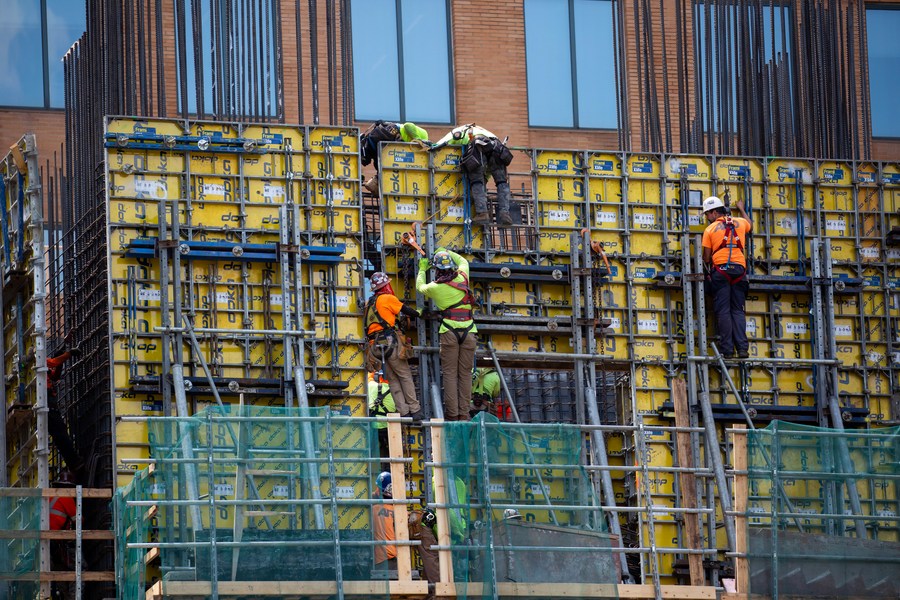
The truth is that America’s industrial decline is homegrown. The U.S. didn’t lose its manufacturing edge because of Chinese competition. It lost it because of its own complacency decades of offshoring, disinvestment, and political gridlock. Trillions have been spent on endless wars and bloated military budgets while infrastructure crumbled, and industrial policy vanished. Tariffs and port fees are not a cure for that they are a distraction from it. America’s greatest threat isn’t China’s rise, but its own inability to rebuild.?The FED manufacturing production index in August 2025 stood at 100.3, virtually the same as the base year 2017 at 100.0. There has been no manufacturing?growth over the past 8 years despite all the tariffs and manufacturing?back to America slogans.
If Washington truly wants a revival, it must look inward. That means cutting wasteful spending, reforming a broken tax system, and investing strategically in what the U.S. still excels at: innovation, higher education, and high-value industries. It means prioritizing engineers over lobbyists, production over posturing. Real industrial policy isn’t about punishing others – it’s about building again.
Yet instead of rebuilding, Washington keeps reaching for punitive tools that project strength but deliver weakness. The port-fee proposal, like tariffs on Chinese solar panels and electric vehicles, reflects a deeper flaw: mistaking protectionism for progress. America has become addicted to the illusion of control to the idea that economic dominance can be restored by decree. It cannot.
To regain competitiveness, the U.S. needs a generational commitment to skills, technology, and infrastructure not a new round of tariffs wrapped in patriotic rhetoric. It needs leaders willing to think in decades, not election cycles. The path to renewal lies not through confrontation, but reconstruction. Until Washington stops confusing nationalism with strategy, it will keep losing ground not to China, but to itself.
The article reflects the author’s opinions, and not necessarily the views of China Focus.