Washington’s New Challenge to International Justice
 Facebook
 Twitter
 Linkedin
 Google +
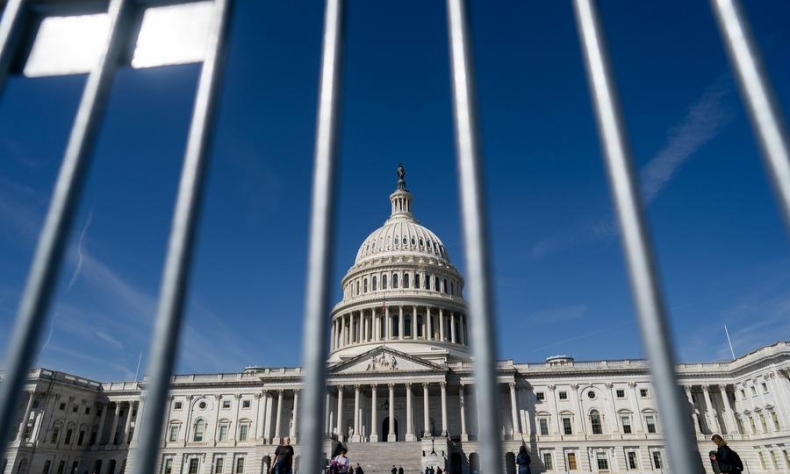
The U.S. is becoming the foremost disruptor of the international system. Its imposition of sanctions against ICC judges serves as a microcosm of the broader struggle over who gets to shape the rules of global governance.
On June 5, U.S. Secretary of State Marco Rubio announced sanctions against four judges of the International Criminal Court (ICC), hailing from Benin, Peru, Slovenia and Uganda. Two judges were sanctioned for authorizing a 2019 ICC investigation into alleged war crimes committed by U.S. forces in Afghanistan since 2003. The other two were targeted for approving arrest warrants issued in November 2024 against Israeli Prime Minister Benjamin Netanyahu and former Israeli Defense Minister Yoav Gallant on allegations of committing “crimes against humanity and war crimes” between at least October 8, 2023 and May 20, 2024, the date when the prosecution submitted the arrest warrant applications.
United Nations High Commissioner for Human Rights Volker Türk condemned the sanctions, saying they “run directly counter to respect for the rule of law and the equal protection of the law—values for which the U.S. has long stood.” Established in 2002 under the Rome Statute—a treaty adopted at a July 1998 UN diplomatic conference, the ICC has the mandate to prosecute individuals for genocide, crimes against humanity, crime of aggression and war crimes.
Legal grounds
The ICC refuted the sanctions, warning that they threaten the court’s judicial independence and may set a dangerous precedent for undermining international justice through coercive measures. This is not the first time the U.S. has targeted ICC officials. In 2020, the first Donald Trump administration sanctioned the court’s chief prosecutor over an investigation into alleged war crimes committed by U.S. forces in Afghanistan. Although the Joe Biden administration later revoked those sanctions, they were reinstated following Trump’s return to office this January.
In justifying the sanctions, the U.S. State Department accused the ICC of politicization and mandate overreach. It argued that the ICC’s investigations into alleged crimes by U.S. and Israeli nationals—conducted without the consent of either government—constitute violations of their sovereignty. Washington also emphasized that neither the U.S. nor Israel is a party to the Rome Statute and therefore the court lacks jurisdiction over their citizens.
However, the ICC insisted that it is acting within its legal authority. It asserted jurisdiction over the alleged war crimes by U.S. forces in Afghanistan on the basis that Afghanistan is a state party to the Rome Statute and has formally referred the matter to the court. Regarding the investigation involving Israeli officials, the ICC said Palestine, although not a UN member state, acceded to the Rome Statute in 2015—providing the court with legal grounds for jurisdiction in this case.
A policy’s limitations
The U.S. sanctions against the ICC judges are widely perceived by experts to be an effort to obscure alleged war crimes committed by the U.S. forces in Afghanistan. The two-decade U.S. aggression directly resulted in approximately 241,000 Afghan deaths, including civilians, and displaced over 11 million people. Despite U.S. spending in Afghanistan exceeding $140 billion—including security and development aid, widespread scandals such as fund misappropriation and corruption severely constrained improvements in the living conditions of the Afghan people. Following the U.S. military withdrawal in August 2021, Afghanistan plunged into a severe economic crisis, mainly caused by the U.S. freezing of Afghan government assets and food shortages. By 2022, the country’s poverty rate had soared to 97 percent.
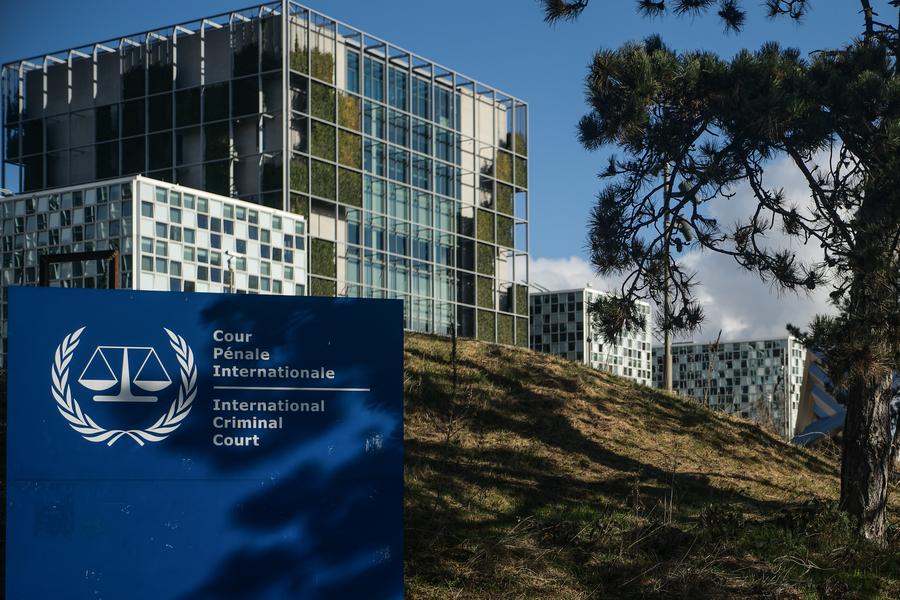
At its core, the U.S. invasion of Afghanistan was a hegemonic expansion under the guise of counterterrorism—one that inflicted immense suffering on the Afghan people. The ICC has pledged to fulfill its mandate as laid out in the Rome Statute and to see the investigation through to its conclusion.
A structural paradox
The imposition of Israel-related sanctions on ICC judges further underlines Washington’s entrenched pro-Israel stance. For decades, American policy toward the Israeli-Palestinian conflict has been marked by a persistent duality. On the one hand, the U.S. presents itself as a neutral mediator. On the other hand, it has repeatedly shielded Israeli interests through military aid, diplomatic protection and efforts to block international accountability—actions that have only escalated regional tensions. This self-contradictory policy reveals a structural paradox rooted in the U.S. hegemonic strategy: While Washington is fully aware what acts are just and comply with international human rights standards, it willingly defies the fundamental principles of human rights when they run counter to its geopolitical objectives. In doing so, the U.S. has fueled the protracted crisis in the Middle East.
Although the U.S. professes support for peace in the Middle East, what it does tells a different story. Between 2023 and 2024, Washington vetoed four resolutions on a Gaza ceasefire at the UN Security Council. Countries such as Algeria have accused the U.S. of “crushing the hopes of Palestinian children.”
The U.S. has taken a biased stance in the Middle East peace process. For example, Biden verbally expressed support for the establishment of a Palestinian state during his presidency, but his administration refused to exert real pressure on Israel—such as officially recognizing Palestinian statehood—leading to a deadlock in the two-state solution. (The two-state solution calls for the creation of a Palestinian state living in peace with Israel with East Jerusalem being its capital—Ed.)
Meanwhile, Netanyahu has outright rejected this framework. Moreover, the U.S. has turned a blind eye to Israel’s ongoing blockade and sanctions on Gaza, which have severely restricted humanitarian aid and deepened the crisis for civilians in the region. Throughout the Israeli-Palestinian conflict, the U.S. has always focused on safeguarding its geopolitical interests by reinforcing Israel’s position through military, diplomatic and economic support, disregarding the international law and human rights.
Who gets to shape the rules?
The U.S. is becoming the foremost disruptor of the international system. Its imposition of sanctions against ICC judges serves as a microcosm of the broader struggle over who gets to shape the rules of global governance. The U.S. pursuit of unilateral hegemony is facing growing resistance across the world.
In the realm of human rights, the U.S. commitment to “America First” and great power exceptionalism continues to erode the foundational international norm of equal protection for all. If political interference by major powers in international justice becomes the norm, the international order based on the rule of law that the global community has worked for decades to build could collapse into a state where might makes right.
It is hoped that the U.S. will fulfill its international obligations, assume its responsibilities as a member of the global community, move beyond hegemonic and unilateral thinking, and engage in good faith with other nations to resolve international disputes and uphold the principles of justice and accountability.
Xiao Junyong is executive director of the Research Center of Science and Technology and Human Rights, Beijing Institute of Technology; Zhang Xi is an assistant research fellow at the center.