What’s Right Is That Which Best Suits
 Facebook
 Twitter
 Linkedin
 Google +
China’s political system has bolstered the country’s decades-long development miracle; it will moreover propel its progress on a new trajectory.
China is now a great power, second in the global power ranking. Yet this is by no means the first time in history that China, as a major power, has been among the world’s most influential countries.
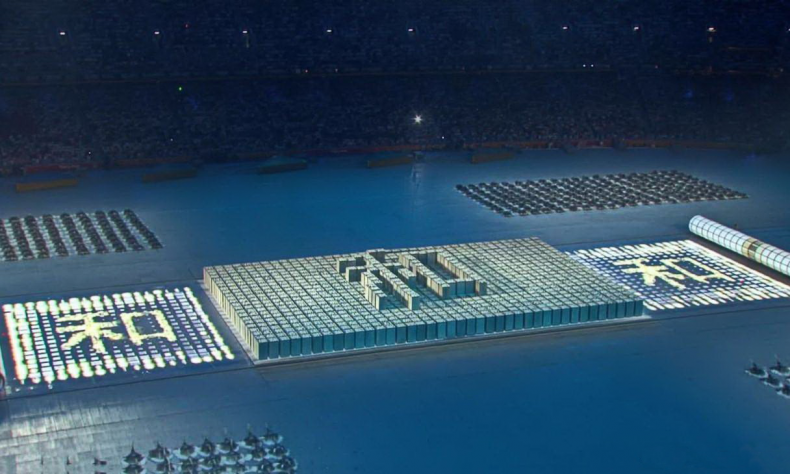
A splendid culture and steady development have featured prominently in the greater part of the country’s history. Chinese idiographs — forerunners of Chinese characters, first appeared more than 4,000 years ago during the Shang Dynasty (1600-1100 BCE). This was at a time when ancient Egypt was at its zenith, centuries before the classical city-states of Greece existed, and a thousand or more years before Rome began its republican history as a city-state. The writing system originating in the Shang Dynasty is still in current use by more than one billion people.
The 18th-century French political economist?Fran?ois Quesnay?once wrote: “No one can deny that this state (China) is the most beautiful in the world, the most densely populated, and the most flourishing kingdom known. Such an empire as that of China is equal to what all Europe would be if the latter were united under a single sovereign.” Yes, this model has not become a reality in Europe, even though it was the main goal arising from the concept of the European Union years ago.
Last year, the Chinese people celebrated the 70th anniversary of the founding of the People’s Republic of China. Just one year previously, the country had commemorated the 40th anniversary of its reform and opening-up, initiated by its architect, the late state leader Deng Xiaoping. This new direction was a turning point in the country’s development.
In the early 1980s, I had the honor and pleasure of taking part — upon the request of the Chinese government — in various consultations whereby we shared Hungary’s experience in reforms and their impacts, and also our steps towards a market economy. I still remember vividly my first meeting, as a member of the Hungarian delegation, with Deng Xiaoping in the autumn of 1987, when I was Minister of Finance. Back then, China regarded Hungary as a kind of laboratory, where reform experiments conducted on a small scale yielded visible results and effects, successes, and also setbacks. This period highlighted the forward-looking, wise character of Chinese politicians in their ability to make specific responses to the world’s new challenges through their use of international experiences.
The beginning of the 2010s threw up new challenges for China. They were apparent in the clear need for different, qualitative development. President Xi Jinping took on the task. The greater power at China’s command entailed new challenges arising in its internal politics, economy, social and regional development and, not least, in the country’s foreign policy.
The Chinese leadership is cognizant of the responsibility attendant upon being a global power, and acts accordingly. Throughout its long history, China has always been a peaceful power, conscious of its potential force but reticent about demonstrating it. It is interesting to refer to Henry Kissinger’s book On China, and his reference to an interview Mao Zedong gave to American journalist Edgar Snow on global political and military issues at the time of the war in Vietnam. Despite earlier confrontations with the U.S.A., Mao stressed his peaceful intentions and China’s position by stating that the Vietnamese people could achieve victory by their own efforts alone. The United States has not always picked up on such messages. This peaceful position, accompanied by a clear consciousness of strength, has been constant on China’s part, and remains a strong component of Chinese politics today.
Why such a short overview of Chinese development and politics? Because I am aware of the many that criticize the Chinese political system, something I believe is due to an absence of knowledge about Chinese traditions, Chinese history, and the nature of the Chinese people. There is, of course, certain envy on the part of other great powers, along with an underriding fear of losing hegemony.
However, it must be stressed that it is by virtue of this continuously developing political system — in operation for 70 or more years — that China has achieved and sustained its great progress. How has this been possible? I am certain it is because this is the system that best suits Chinese historical and cultural traditions and the nature of the Chinese people.
China’s present system is known as “socialism with Chinese characteristics.” Here I also want to mention another important term frequently heard in Chinese politics, that of the “Chinese Dream.” It is reminiscent of the “American dream,” one, however, that has lost some of its original lusters.
It is a mistake to believe that a political system that functions efficiently in other parts of the world, specifically in Europe or America, could work in China. The correct approach to global history is one requiring countries to respect one another’s different political practices and not to force any of them on others. We must admit that there is no perfect political system. The traditional democracies, founded on those of ancient Greece and Rome, require a different type of governance in both Europe and America.
It is important to note that the multimillennial Arab countries situated by the rivers Tigris, Euphrates, and Nile, or, for example, the Persian Gulf regions of Iran and Saudi Arabia, also employ specific modes of governance that correspond to their own respective traditions. It is unobservance of this principle that sparked the Arab Spring movement, which instead of diminishing tensions in the region, compounded them. We hence need to respect the political system which China has chosen in light of its particular history, culture, and social conditions.
The starting point for a proper assessment of the facts should be that whereby every political system tends to improve and perfect itself within its own framework specifically for the benefit of the people it governs.
The China-proposed Belt and Road Initiative (BRI) has ushered in an important stage for the country, on which China is enacting a big role in global politics. The initiative offers a new model for international relations that a number of countries have already adopted. As the representative of a strong and confident China, President Xi delivered a speech in Davos in 2017 in which he confirmed China’s intention to support free-market competition, promote free trade, and espouse economic and political multilateralism.
In summary, its acknowledgment that learning is the key to improvement is the most positive feature of Chinese politics. I would like to conclude with a quotation from Confucius, since the Confucianist way of thinking remains one of the basic principles of Chinese society:
“Love of watchfulness without a love to learn finds itself obscured by ignorance;
Love of knowledge without a love to learn finds itself obscured by loose speculation;
Love of straightforwardness without a love to learn finds itself obscured by misdirected judgment;
Love of honesty without a love to learn finds itself obscured by harmful candor;
Love of courage without a love to learn finds itself obscured by insubordination;
Love of strong character without a love to learn finds itself obscured by intractability.”
Péter Medgyessy is a former Prime Minister of Hungary.
Source: China Today