Why Goal-Oriented Governance Succeeds
 Facebook
 Twitter
 Linkedin
 Google +
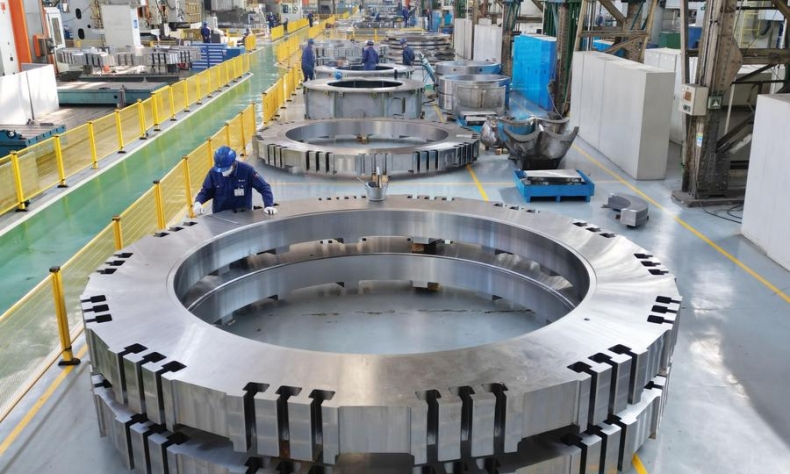
The five-year plan both embodies visionary top-level design and stays grounded in the needs of people’s livelihood.
Why has China been able to achieve development miracles one after another amid the twists and turns of globalization, and how does China realize its national goals with optimum efficiency? The answers lie in the country’s unique goal-oriented governance system, which is best epitomized by its five-year plans.
At the core of this governance system of Chinese characteristics is China’s ability to set rational goals for different sectors and mobilize resources of society as a whole to realize them. In this process, it shows a formidable capacity to achieve national objectives. This explains China’s development miracles and exemplifies its institutional strength. Through goal-oriented governance, China transcends the binary opposition between planned economy and market economy, offering a new institutional solution to global governance.
Long-term, systematic planning
Chinese modernization is a clearly defined century-long process – to build a great modern socialist country over the period from 1949 to 2049. It has been broken down into phased objectives across 20 five-year plans, each with corresponding objectives and goals. During the first 30 years (1949–1978), China successfully established an independent and complete industrial system. Over the following 40 years (1981–2020), it completed eight five-year plans and built a moderately prosperous society in all respects. In 30 years between 2021–2050, China will implement six more five-year plans to elevate itself into a great modern socialist country.
Now, the country is about to enter the 15th Five-Year Plan period (2026-2030), a critical juncture in this century-long journey. As a blueprint for a pivotal phase of China’s modernization drive, this plan should not only outline objectives and tasks for the next five years, but also pave the way for achieving socialist modernization by 2035.
Modernization is China’s overarching goal over the targeted century, which can only be achieved through continuous efforts over generations and successive five-year plans. But the specific targets for each phase are subject to adjustments in order to remain relevant to the realities of the day. This long-term strategic vision stands in stark contrast to the approaches of some other countries.
When faced with a complex, ever-changing international landscape, such as trade frictions, China has maintained firm strategic resolve and calmly navigated challenges. This steadfastness stems from its unique development model: playing the long game. As Nobel laureate in economics Robert F. Engle observed, while China is making five-year plans for the next generation, Americans are planning only for the next election.
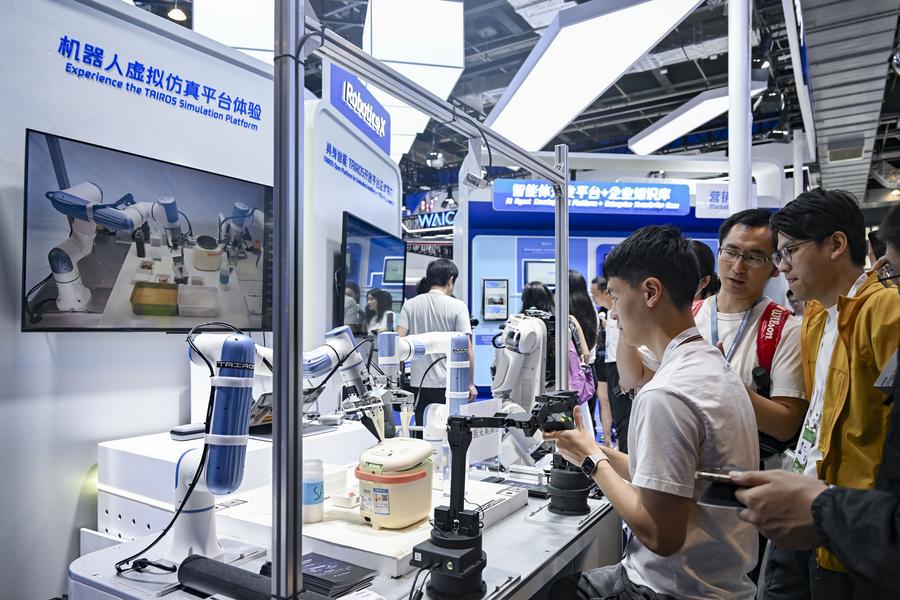
Another notable advantage of goal-oriented governance through five-year plans is systematic policymaking. To ensure that the plans’ objectives will be realized, China designs its policies and institutions in a systematic manner, making well-coordinated maneuvers in light of the plans’ goals and guidelines. For better alignment of macro policies, China emphasizes the plans’ function of strategic guidance, requiring them to play a bigger role in steering macro policies in sectors, such as finance, land, industry, science and technology, and social welfare.
In contrast, some countries lack a systematic goal-oriented governance framework. Bills or executive orders are introduced arbitrarily, lacking consistent alignment. Therefore, their policies often have conflicting objectives and counteract each other’s effects, leaving businesses bewildered by erratic policy signals. This undermines the consistent and stable development of the national economy and society.
Coherent and achievable
Once approved, China’s five-year plans move off the drawing board into effective implementation. Through sound execution mechanisms, China can efficiently mobilize nationwide resources to support their implementation. It has also established a closed-loop management system that covers every step along the way, such as formulating responsibility allocation plans, setting detailed obligatory targets, breaking down five-year goals into annualized deliverables, making dynamic evaluations, providing rigorous supervision, and adopting incentive policies.
During the 14th Five-Year Plan period (2021-2025), China has made steady progress toward most of its pre-set goals, despite disruptions arising from the pandemic and global turbulence. This demonstrates the resilience and feasibility of the country’s development strategy. Its strong capacity to deliver has not only allowed China to achieve leapfrog development at home, but also bolstered its credibility abroad. For example, China’s pledges in areas of international cooperation like climate change mitigation carry great weight precisely because of its proven track record of turning plans into reality.
Starting a new dialogue
China’s goal-oriented governance model does not rely on one-way top-down directives, but rather fosters a virtuous cycle of synergized development between the state and individuals. The government respects the autonomy of businesses and citizens in pursuing their own development goals. Through policy guidance and resource allocation, it helps their aspirations to be integrated into the broader national agenda, hence creating close alignment between individual objectives and national strategies.
The five-year plan embodies both visionary top-level design and stays grounded in the needs of daily life. By extensively soliciting public input and staying attuned to popular demands, China integrates micro-level wellbeing priorities into macro-level strategic plans, bridging the broader needs of national development with the specific demands of citizens and businesses.

Take the development of new quality productive forces as an example. Relevant strategic goals outlined in the five-year plan need to be translated into concrete industrial policies and investment projects at various levels, and ultimately materialized in the innovation practices of enterprises. This is a process of interconnection and interaction between macro-level policies and micro-level economic activities.
Countries around the world face diverse challenges in their development. While some nations, overeager to cater to current public opinion, cobble together short-sighted policies, others fail to achieve their goals due to a lack of systematic planning. Both struggle to balance national strategies with public demands.
In contrast, China integrates individuals’ aspirations for a better life into the overall framework of national development. Through five-year plans, it formulates rational and feasible policies and provides sustainable, systematic development solutions to address the people’s concerns, such as those about income, healthcare, elderly care, and education. In doing so, it reconciles the broader vision for national development with the specific needs in people’s lives.
Global vision
Planning is a product of human civilization, conveying our collective pursuit of orderly development. From Karl Marx’s concept of a national plan and the planning theories of German left-wing thinkers, to the planning practice of the former Soviet Union, the idea of planning has evolved throughout history. Building upon past theories while adapting them to its national context, China has creatively developed a new planning model for the 21st century, which has shattered the stereotype about a traditional planned economy and also offered a new approach to global governance.
In the 1930s, some argued that centralized economic planning could not work because both the major market players and information were too dispersed. China’s success has disproved that notion. The country’s planning is based on holistic understanding of the entire society. Planning serves as the most effective tool for development, while market-based mechanisms are more effective in regulating micro market domains where information is gathered from the bottom up.
The essence of China’s model lies in its integration of state planning and market dynamics, with each playing to its strengths at different levels and in different sectors, while reinforcing each other to generate a compound effect. China’s five-year plans have evolved into comprehensive national development strategies, encompassing economic, social, cultural, ecological, and other dimensions. This is a holistic knowledge-based planning system. The plans represent invaluable Chinese wisdom for humanity’s shared quest for better governance in the 21st century. With its distinctive goal-oriented governance, China offers an efficient alternative for the global exploration of future governance models.
Yan Yilong is a professor at the School of Public Policy & Management, Tsinghua University.










