Will India-Middle East-Europe Economic Corridor Be Competitive with BRI?
 Facebook
 Twitter
 Linkedin
 Google +
There is genuine demand among these developing countries for the roads, railways, ports and power projects China has been building under BRI. It fills a vital developmental gap.
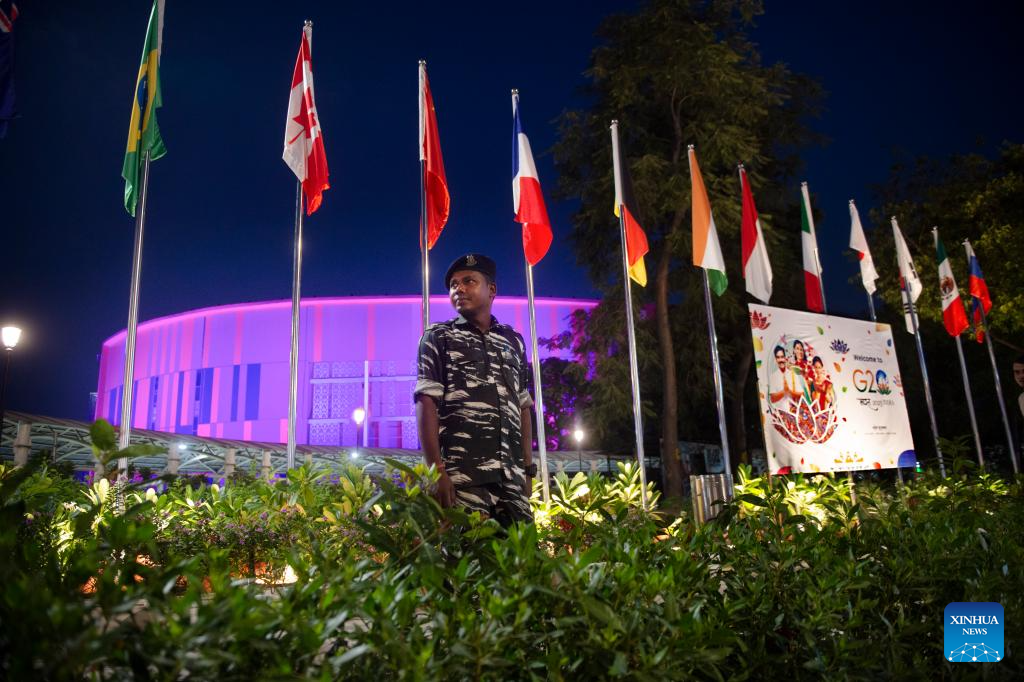
In a bid to draw parallel to the?Belt and Road Initiative (BRI) that embodies inclusiveness, openness and shared dividends, announced at G20 summit titled “India-Middle East-Europe Economic Corridor (IMEC) lacks the global aura, scale, resources and networks to meet current as well as future demands of the world.
Ridden with spiral sense of post-cold war syndrome, bloc politics and divisions, IMEC sounds squeamish. Compared with multi-faced tangible dimensions of the new Silk Road that is tested and proven with empirical benefits to signatory countries, IMEC is yet to get a head start. The BRI?has been on the ground for years but IMEC is just on papers.
India and the U.S. which are architects of IMEC have planned to lead the world dreaming its paragon connectivity across the continental and cross-continental arenas. However, it missed potential areas like Africa, South East Asia, Central Asia and South Asia besides India that have fertile potential to change the development fate of future of world.
It is a pity that China tried to include?India in the BRI with complete sense of sincerity but India declined. And in IMEC case, India did not bother to invite China to join IMEC. This signifies covert credentials of IMEC and its peevish ambitions.
Having similar fate like the U.S.-led Indo-Pacific Economic framework (IPEF) touted as all-too-obvious political publicity stunt, IMEC is also devoid of comprehensive connectivity framework to make things happen.
Similar to IPEF, at the sideline of G20, White House again made another attempt and presented IMEC as another alternative to the BRI.
Lack of consistency in implementing, global economic policies has already drawn the ire of international players, especially those part of the U.S.-led frameworks. It is a strong belief that with the change of command, the U.S. changes its economic strategies. The Trans-Pacific Partnership, an ambitious major trade pact involving the Indo-Pacific countries, was part of President Barack Obama’s strategic pivot to Asia. Trump pulled the U.S. out of the trade pact in 2017, after it drew criticism from the protectionist end of the U.S. political spectrum. Nobody knows what will happen with IMEC after Biden is gone.
Experts believe that IMEC hurts economic dividends harming globalization and win-win situations, It solely serves the geopolitical interests of the U.S. and India who believe that IMEC will give leverage in coping with “economic security threats” from China. However, in contrast to unfound fear, China never claims that the BRI is a tool to challenge economic world order. Rather the China-proposed BRI champions the cause of win-win situation to all.
With rising inflation, geopolitical disputes and energy crises seriously threatening the entire world, the international community needs to seek cooperation, not division. IMEC being driven more by geopolitical considerations rather than economic factors, might emerge as non-starter.
Moreover, a notable feature of the BRI projects is its emphasis on channelizing investment into developing and emerging economies, especially in regions like Southeast Asia, Africa, and the Middle East. Countries like Pakistan, Iran, Malaysia, Sri Lanka, Kenya, and Ethiopia have been major recipients of BRI largesse, receiving substantial Chinese funding for infrastructure development. This has allowed the BRI to earn goodwill and political support from a large bloc of developing nations. IMEC lacks this kind of developing country focus. The proposed corridor connects India with the wealthy GCC states and major European economies only. This narrower geographical scope robs IMEC of the developmental legitimacy and political appeal that the BRI enjoys in the developing world.
Announced with much fanfare in 2023 at G20 summit in India, IMEC envisions improved trade routes and connectivity between India, the Middle East, and Europe via upgraded rail and shipping links. The memorandum of understanding signed between India, EU, the U.S. and Middle Eastern states like UAE, Saudi Arabia, and Israel aims to strengthen economic integration between Asia and Europe. However, when analyzed closely, IMEC simply does not have the financial firepower or geopolitical leverage to match the gigantic BRI spanning over 60 countries across Asia, Europe, Africa and beyond.
The West appears to be grappling with how to respond to China’s ascendance on the global stage and its ambitious Belt and Road Initiative (BRI). As a result, it seems they made IMEC announcement to garner attention. Former British Prime Minister Gordon Brown, delivering a speech at the Annual Public Forum of the World Trade Organization (WTO), voiced his disappointment regarding the recent G20 summit’s failure to effectively tackle critical global economic challenges. He underscored that despite India’s diplomatic achievement in hosting the summit, it fell short in making substantial headway on crucial issues such as climate finance, the regulation of artificial intelligence, alleviating debt burdens in Africa, and addressing extreme poverty.

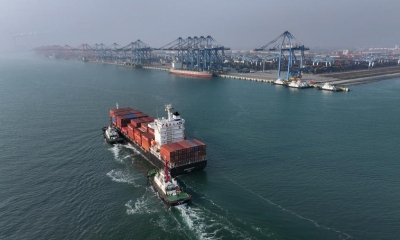
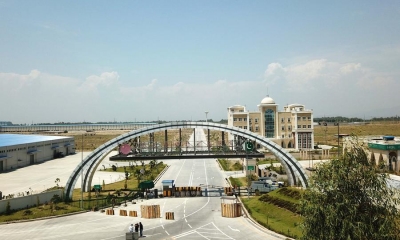
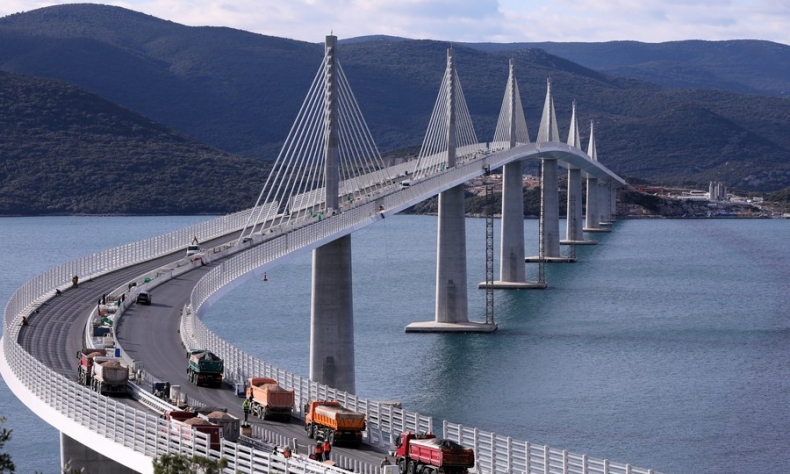
The most obvious advantage BRI enjoys over IMEC is its massive head start and sweeping scale, as it was started ten years in advance than the proposed IMEC. Ever since its launch in 2013, China has mobilized close to $1 trillion in investments across over 3,000 BRI-linked infrastructure projects ranging from ports, pipelines, highways, railways, power plants, and other connectivity links. Over 150 countries have signed up for BRI projects and funding agreements,?lured by the promise?and achievement?of upgraded trade and transit networks. From the China-Pakistan Economic Corridor (CPEC) to railways in Laos and highways in Montenegro, BRI’s tentacles stretch across vast swathes of Asia, Europe, Africa, and the Middle East. The mammoth scale and scope of BRI simply dwarfs the limited India-Gulf-Europe corridor envisaged under IMEC. With billions already invested and projects underway, BRI has acquired a self-sustaining momentum that will be hard for any competing initiative like IMEC to match.
A major limitation of IMEC is its lack of overland transport links and cross-border connectivity. The BRI’s great advantage lies in its extensive web of rail, road and pipeline corridors providing connectivity between China and its neighbors in South, Southeast and Central Asia. Core BRI projects like the CPEC and the New Eurasian Land Bridge consist of rail and road networks linking China with the Indian Ocean, Central Asia, Iran, Turkey and beyond. IMEC in contrast is confined to maritime routes and port connectivity between India, the Gulf states and the European Mediterranean. The lack of overland transit options robs IMEC of flexibility in cargo transport. Political differences and conflicts can easily disrupt shipping lanes. The BRI’s varied mix of land and sea routes makes it more resilient. With wider access to trade hubs in the Eurasian hinterland, the BRI clearly dominates in terms of cross-border connectivity.
Despite strong opposition of the West, the BRI has managed to attract interest and participation from a geopolitically diverse range of nations across Asia, Africa, Europe and the Middle East. The inclusion of countries like Saudi Arabia, UAE, Iran, Italy, and Nigeria shows the BRI has appeal beyond China’s immediate neighborhood. The open and inclusive structure of the BRI allows room for both U.S. allies and strategically important developing countries to reap its benefits. IMEC lacks this kind of diverse and multilateral structure. It is clearly demarcated as a U.S.-led initiative aimed at countering China.
The choice of partners like India, Israel, UAE reveals IMEC’s focus on stitching an anti-China bloc. This undermines IMEC’s appeal to a wider array of countries. Its exclusion of notable players like Iran and Türkiye also erodes geographic integration. BRI has adroitly positioned itself as an open architecture for global cooperation, making it more appealing, especially to developing countries.
A major reason why the BRI has elicited such avid response is because it caters to the pressing infrastructure and connectivity needs of emerging economies in regions like Southeast Asia, Africa, and the Middle East. There is genuine demand among these developing countries for the roads, railways, ports and power projects China has been building under BRI. It fills a vital developmental gap. IMEC does not cater to similar organic developmental needs, beyond general trade facilitation.
The U.S. promises of investment under schemes like Build Back Better also failed to materialize. Unless the U.S. manages to pool billions in infrastructure funding, IMEC will remain an aspirational concept. China’s economic heft and collaboration with various multilateral and regional development institutions have?played a crucial role in translating the BRI into reality.
However, according to participants at a conference in Hong Kong marking the 10th anniversary of the Belt and Road Initiative in second week of September, as per another perspective it is good for the BRI to have competition and that more connectivity will benefit global trade. “Yeah, why not? Competition is good. The more the better. We are participating in most of them,” said Khaled Mohamed Aljassim, a board director of the Chamber of Commerce & Industry in Fujairah, United Arab Emirates.
He said countries should not be pressured, however, to choose between the BRI or the IMEC and should be able to join both should they choose to. The UAE is a part of BRI but is also a IMEC signatory, along with Italy and Saudi Arabia.
The author is President of Institute of International Relations & Media Research (IIRMR).
The article reflects the author’s opinions, and not necessarily the views of China Focus.